Showing posts with label Mali. Show all posts

Tuesday, April 20, 2010

Project Summary, April 2010

By popular demand, here is a full summary of our current Phase I project status. Even the project teams are amazed at what we accomplished in such a short time!
Project Summary:
Phase I: Water, Solar, & Sanitation for 6 schools, which includes:
    1. Pipeline to bring closest clean water source to a new tap stand positioned next to the school, which enables hand washing and sanitation programs for students.
    2. Solar lights in every classroom, which enables after school studies and reading, higher test scores, and adult learning classes; as well as improved safety and security. We also learned how helpful the lights have been during the days, particularly sand storm afternoons (see photo below), now the teachers can close the heavy wind shutters to keep out the sand and heat and still have light to continue classes.
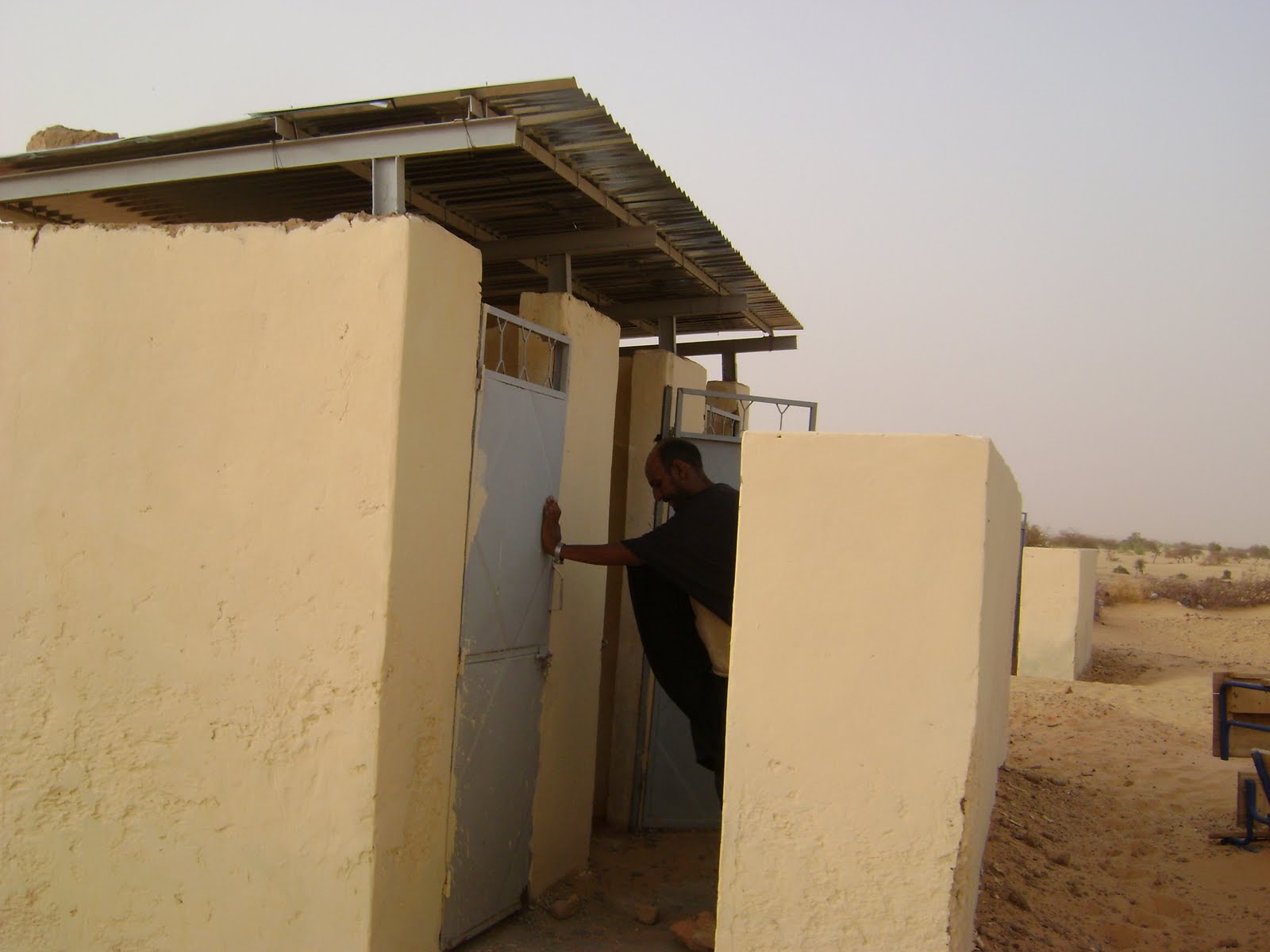
    3. Latrine repairs, maintenance program, and proper use training.
    4. School yard enclosure, which keeps out the encroaching sand dunes, animals and their dung!
    5. Financial sustainability programs: a copy center and a millet grinding center, which enable each school to generate income for maintenance costs for all of the above.
Funding Status:
RI Matching Grant for $59,000 and NomadHope private donations of $5,000
 >>> Results: Two Schools finishing up this summer
    RI Grant for $27,000 and NomadHope private donations of $5,000
    >>>  Results: Third school starting this summer

    $5000 private donation + $5000 Rotary Club match = $10,000
    >>> Plan pending for additional millet grinding centers, one at each of 5 more schools
      Accomplishments Summary
       Student Sanitation & Hygiene programs in place:

      • Installed 2 Water Pipelines (170 & 270 meters)
      • Installed 2 Tap Stands (6 taps & a soak pit ea.)
      • Repaired 2 Pit Latrines (6 Stalls, doors, & roofs)
      • “Laver Les Mains” (Wash the Hands) program
      • Clean hands for daily school meals
      • Started Cleaning & Appropriate Use program
      • Increased attendance and student illness reduction
      • Access to clean & safe pit latrine
      2 Schools, all classrooms have lights, inside and out!

      • Installed Solar Lights (6 classrooms & 2 office buildings)
      • Trained 6 Men for Solar maintenance & repairs
      • Evening Classroom programs in place:
      • More study & reading hours each day
      • More frequent changes of blackboard curriculum
      • Less use of kerosene, lower respiratory risks
      • Community evening meeting facilities
      • Women’s evening education classes
      • Safety for overnight students
      Financial Sustainability programs operational:

      • Installed 1 Millet Grinding Ctr. (room, floor, tools)
        • Trained 1 Machine Operator (10 days)
        • Facilitated Price Setting & Quality Tests
        • Trained 3 School Cooks on Solar Oven Use
        • Facilitated 3 Solar Oven Meal Tests
      • Installed 1 Copy, Print, & Photo Center
        • Trained 1 Operator
        • Researched & Established pricing
        • Marketed to other communities (resident photo ID cards, academic reports, tourist services
      • School guardians maintaining solar and tap stands
      • School cooks maintaining latrines
      • Millet & Copy Centers generating school income for maintenance & repair costs
      • Memo of Understanding signed, ownership transfer
      • Other Benefits:
        • School Director out of pocket costs reduced
        • New skills & employment opportunities
        • Reduced time, effort, & injuries to prepare meals
      2009 Implementation Teams
      Photo: See Farach school out in the distance.


      NomadHope:
      - Keely McGeehan, Lead Project Mgr., 2009 Travel team
      - Fatimata Abdoulaye, Cultural Liaison
      Engineers Without Borders (EWB) - LA Professional Chapter:
      - Tony Haske – Solar Expert / Lead, 2009 Travel team
      - Steve Factor - Solar Expert
      - Ed Andrews - Water Expert / Lead
      - Alan Kwan – Water Team, 2009 Travel team
      - Michelle Tuchscher - Project Manager
      - Michael Hamilton - EWB Mentor

      Adjmor - Hamadi Abba, Mali Project Mgr., 2009 Travel team
      Photo: Keely getting Mayor's approval to work in region.

      Rotary Club Members:
      - Gordon Roedding, Bamako - host and advisor
      - Malick Niang, Bamako - travel assistance
      - Donn Ennis, Manhattan Bch – grant administration
      - Aliyah Levin, Manhattan Bch - grant administration

      School PTA (‘CGS’) & Community Members:
      - M. Mohamed Ahmed Ag Mohamed Aly - Farach School Director
      - M. Mohamed Assaleh Ag Moctar - Farach President Comité de gestion scolaire
      - M. Alassane Ag Rhaly - Zouera School Director
      - M. Mohamed Ag Insoudiaye - Zouera President Comité de gestion scolaire
      Local Product & Services Partners:
      - Local masons (water)
      - AfriquePower (solar)
      - GeekCorps Mali (copy centers)
      - M. Tijani (millet centers)

        WOW, right?

        Bookmark and Share

        Tuesday, March 30, 2010

        Water flowing in Zouera!

        Just got word that the water is now flowing in Zouera, to the school hand washing tap stand! and latrine repairs are done.  Hamadi's camera was attacked by a sand storm, so he sent photos from his cell phone instead.

        He said it was a difficult trip, but they got the job done, I can imagine what that means, really! The only time I lost my cool was in Zouera one late night on a sand dune, right after Hamadi threatened to rip out the tap stand and move it to Tissikoreye, and I fantasized about taking the 4x4 and running away, LOL... long story. (I still haven't posted the 'funny' stories of our trip in December. promise to do that, with photos, soon)

        Anyway, we are close to finishing the loose ends for Phase I in Farach and Zouera. Lights are on, and kids can wash thier hands and use the latrines, millet machine a big hit, and cyber cafe up and running, yippee! Just need to get the school campus wall / enclosure up now to keep the animals out.

        Latrines here now have doors back on and roof repaired. The high winds and lack of use had the school latrines in disrepair. The students were afraid to use them without the roof and the girls wouldn't go in without a door. All in workign order now. Director promised to put a large can for water and tea pots for washing in each stall, will have to call and remind him now  :-)
        The mason had to remove the existing pipe into the reservoir and replace it with a T and shut off valve, to feed both the animal watering pipeline and the new school tap stand. Looks like it took some strength to remove the old pipes.
         Sand storms kicked in while they were working, which likely wasn't much fun!
        And Voila, enough water to wash and drink, but not enough to encourage a queue of women, donkeys, and jerry cans, just as planned!
        Here's a photo of the main reservoir tapstand, where the women queue up each morning to beat the man that shuts it off and turns on the hose for the aniamsl, they usually get stuck and have to wait for the animals pipeline to be shut down to fill up thier cans, lots of chaos and shouting there usually.

        Bookmark and Share

        Tuesday, January 26, 2010

        Back in the USA, and flu season!

        Well, I am back in the USA now, actually for a few weeks, but was down with the flu for 3 weeks and now seem to have some other kind of "bug", LOL, but really not so funny. I am up and down with whatever this is............

        Hamadi was pretty sick when we left and just getting his legs back now too. He is back in Farach and Zouera this week to check on everything, should hear an update soon and will pass it on. He and I are continuing to work through the final implementation tasks we agreed to before I left there. We are closing in on final bids and plan from fencing / campus enclosures. He has sent us a plan and bid for a hydraulic engineer to visit Zouera and give us the root cause of the slow water to the tap stand and some recommended solutions. I reviewed the initial trip results with the EWB team here on Sunday and have another meeting scheduled with our water lead next week. We will collaborate with the Mali engineer to finish the hand washing solution there. More on both of those efforts soon.

        I will be posting trip photos soon, which I know everyone is waiting for. Just haven't been well enough for long enough to get to it yet. Sorry. Here's just two
        to tease you...
        More soon, including fun stories of our journey!

        Bookmark and Share

        Monday, December 21, 2009

        From the field in Mali, Dec 21

        Final update here from Mali; the team is back in Timbuktu (TB2) now doing final debriefs; project has gone very well, just a few problems to sort out; villages and school directors are very happy and look forward to working with us all again next year.

        One quote we received "most NGO's just send money and leave us to solve all the problems with their projects, NomadHope, Adjmor, & Rotary came with an 'army' to help us!"

        Farach had a small party for us yesterday, to celebrate our success there. the pipeline and tapstand are done and the children began using it yesterday. The soak pit is almost finished, should be done tomorrow. The lights are all working in every classroom and the school Director's office too. And finally the Cyber Copy Center is all up and running, just waiting on the internet key to arrive from Bamako and the Director will get some more training onsite in a week or two. The application everyone seems to be excited about there is the photo ID cards everyone must have, which before the Farach copy center required all to pay for transport to Goundam or TB2 to have ID's made, until now!

        The school fencing is still being planned, and very important; Adjmor and I are getting bids today.
        Zouera classroom lights are all working too, but the tapstand is not producing water yet, it arrives just to the tapstand and stops; we have some engineers discussing options with us here and will push to solve this soon. Could be the pressure at the source or a stoppage in the pipeline. This is very dissappointing to everyone, but we committed to find a solution soon.

        The Millet grinding machine is a big hit in Zouera and the first women arrived yesterday to pay for using it ! Some are paying in millet and sorghum if they have no money, which the school will sell at market for cash, but many are able to pay cash. The only problem there is the lack of confidence the operator has in being left alone with the machine, which we believe he will overcome with time working alone. We agreed to have Adjmor go back in a month to check on him and see if more training is needed.

        We leave tomorrow for a short break before going home, I am very sad to leave, as always.


        Bookmark and Share

        Monday, December 14, 2009

        From the field in Mali, Dec 14th


        Still waiting for the solar equipment to arrive, been 5 days since they left Bamako and think they crossed the river today; have our fingers crossed for an arrival tonight.
        Tony, Alan & I took a day off and were tourists in Timbuktu today; lovely city with lots of history and beautiful architecture, libraries, and museums. Lots of Obama Tshirts in town, very funny.
        Tonight we may be loading equipment on trucks!
        Good news is that the pipeline test today was a success in Farach, so they just wait for us to finish the cement on the tapstand; Zouera is moving the tapstand to the location I proporsed a week ago, LOL.
        Tony met with AfriquePower yesterday and observed the training of the village guardians who will maintain the systems; he felt the training was very thorough and is collaborating with the vendor on a photo maintenance manual.
        Alan is missing his friends in Mopti, but has been practicing his Bombara in TB2 with Hamadi's family and anyone we come across; all are very impressed with his fluency.
        Tony and Alan are fitting right in, drinking tea daily with the Tuaregs, and looking forward to visiting the schools tomorrow, Insh'allah.
        Sorry no photos, too slow.


        Bookmark and Share

        Sunday, December 13, 2009

        From the field in Mali, Dec 13

        Hello again from Mali! A quick update from Timbuktu on our progress.
        • The copy center in Farach is done, we are trying to find an internet connection solution for it and organize some PC training for the school Director, and someone to run it a few hours a day;
        • the millet machine in Zouera required us to move the machine a bit; (which of course had been cemented into the ground), which has been done and the first technician let go and a more competant one hired to complete the install and training; it should be up and running when we get back there in a few days; the village women are excited and waiting to use it!
        • the pipelines are done in both Farach and Zouera, quite an amazing thing to watch being done; a few cell phone calls from the President of the Zouera PTA and 21 men showed up with pick axes to dig the 250 meter trench;
        • the tap stands are being done now next to each school, lots of confusion about the design and how it should be done, but with Hamadi's help I think we straightened it out; we hope to see them working when we return;
        • The 2 Engineers without Borders volunteers, Alan & Tony arrived yesterday and are getting used to everyone and everything;
        • The solar trining started yesterday and really got going today, with 3 trainees from Zouera and 3 from Farach in town for this; Our solar partner told me today that the team is very intelligent and picking it up quickly;
        • As soon as the truck with all the solar equipment arrives, we move everyone to Farach to being the install there first, no easy task as this entails loving 2 truck loads of equipment and about 15 people via 4x4 to the schools, where there are no roads;
        more next time, internet connections have been tough.

        Bookmark and Share

        Sunday, December 7, 2008

        Mali November 2008 Trip Summary

        Since I was unable to post here while I was travelling this time, I am writing a trip report summary here to give The Friends of NomadHope some insight to the engineering site assessment trip we just completed in November. Enjoy!

        The mission of this NomadHope project in Mali is to provide water, sanitation, and solar lighting to six rural community schools. It is a joint project of NomadHope, U.S. and Mali Rotary Clubs, Engineers Without Borders (EWB), Adjmor (Mali NGO), and the leadership of the six communities.

        The Objectives of this month long trip was as follows:
        • Establish the necessary partnerships for a successful project, in particular our local Rotary partner and local NGO.
        • Conduct engineering assessments (with Engineers Without Borders - EWB) of all 6 schools, including water quality/quantity, sanitation & hygiene, and solar electricity placement.
        • Meet with each community and parent organization to assure we understand their needs and obtain their commitment for project sustainability.
        • Establish transportation partnerships, i.e. good car, driver, cook for future trips.
        • Take photos and video for marketing and fund raising.
        • Source suppliers for the project materials and labor, start the bid process.
        Needless to say, we had a full plate!
        Geographic Orientation:

        We are working is the Region of Timbuktu. Mali is divided into eight regions. The regions are subdivided into 49 cercles (circles). The circles are subdivided into communes. The schools that have asked for our help are in six villages within the commune of Essakane: Farach, Zuera, Essakane, Tissikoreye, Bancor, and Emimalane. All within 3-4 hours from the city of Timbuktu, by 4x4! This is about a 17 hour or 2 day drive from Bamako, the capital of Mali.

        My first few days in Mali were spent running errands in Bamako, preparing for the trip north, and meeting with several potential partners.

        Fatima Abdoulaye is an EWB member from NYC as well as a volunteer for NomadHope and has been a tremendous asset to our efforts since I met her last year. She is from Mali and her family opened their house to us while we were in Bamako. Bamako was hot and crowded, as big cities are, but Fatima's family welcomed me and I have been adopted as a daughter. "Keely (Zeïnabou) Walet Abdoulaye"!

        I met twice with our new Rotary partner, the Bamako Doyen RC. They agreed to work with the Manhattan Beach and Long Beach Rotary Clubs, our U.S. partners, and assigned a Senior Project Coordinator to work directly with us. Malick Niang, the Bamako RC President, and I did the official RC flag exchange to begin our long term relationship. We established several other good contacts in Bamako, including the Chief of the Section of Community and Nomad Schools, and AfriqPower, the solar panel manufacturer we hope to do business with.


        After a few long, hot days running all over the city (Bamako is a big, broad city), and many home cooked family meals, Fatima and I left for Timbuktu by plane.

        Once in Timbuktu, we picked up our 4x4, driver, cook and supplies and drove the 3 hours to Farach with Hamadi (of Adjmor, our local NGO partner). In Farach we had our first community meeting. Each community is organized with a PTA, School Director, community leaders and a chief. Some of these meetings were small and intimate while others were large and very interactive.

        I have to say that without Fatima (EWB) and Hamadi (Adjmor) we could not have accomplished all that we did in such a short time. Hamadi proved to be an excellent partner for us and is well respected in each community. The meetings were started by me in English and some French, then Fatima would translate into French, then Hamadi into Tamasheq. Then sometimes a community member would translate again, just to be sure!


        The meetings were great and the leaders and parents are very interested in having lighting in their schools, as well as better access to clean water and sanitation programs for the students. They came up with some great ideas for sustainability programs and are very committed to make this a success. We found only one of the six communities to be unorganized when it comes to programs for their school, so we will meet with them again in a year to see how they have progressed.
        The second week, Hamadi and I picked up our two EWB volunteers, Michael and Tamar, to begin the Water / Sanitation and Solar Assessments for each school. Back again to all six, setting up camp each night and visiting 2 schools each day.

        Michael and Hamadi collected the water samples from each water point, while Tamar and I took the solar photos and measurements for each school room and building. Then Tamar and Michael did the water quality analysis, while I surveyed the latrines and Hamadi ran down answers to our open questions and prepared for the next village stop.

        These were long, yet very productive days; and we made for an excellent team!
        We gathered all the necessary data for a full water and solar assessment in each village! In summary, the communities reported four water points to have quality issues, but we found only one or two to have issues that present health risks. I will wait to see Michael's full report to give details. All six villages have large reservoirs being filled by a bore hole well with a solar pump (forage). Each also has one or several manual open wells (puis). Each water point has some issues, some minor like broken taps and others with leaks and insufficient taps for human and animal herds' needs.

        Each village has a school building, two of them are in pretty bad shape while the others are fairly new. Each also has one or two pit latrine buildings near the school, but none are really in use. Some reasons are the lack of a nearby water point, unfinished structures and roofs, no guardian and process for cleaning and maintenance. None of the schools have a hand washing program for the students because the water point is too far away.

        Each school has a meal program, with millet provided by PAM, another NGO. One school does not have a school cook, so the millet is given to nearby families to cook for the children at noon, while the others prepare the meal on campus for the students. The meal takes about 4 hours to prepare, gathering firewood and water, pounding millet, stoking the fire and making porridge. (see a short video of a school cook)

        As for the sustainability of this project, I made it very clear that we want each community to come up with a "sustainability program" that enables them to generate new income for the school that will pay for the solar and water guardian, maintenance, and replacement parts that they will need year after year. Most of the projects in these communities to date have depended on the families paying a monthly fee to sustain them. That in itself is not sustainable! They already pay for water from the forage, the forage guardian, the school cook, and the teachers as well... how much more can they be expected to pay without a plan to generate new income.
        It took some prodding, but Hamadi was able to get the community leadership group to come up with some creative ideas for this. For example, Zuera is a marketplace for the nearby communities and the women are producing products like cheese, bread, and other baked goods to sell at market. They would like to have a large solar oven and solar millet grinding machine for the school (see a video here of one I found in a larger town)
        , which they would be willing to pay to use. This would enable them to make more market product faster and generate additional income for each family. This would also generate income for the school! Farach is on the route that brings tourists during the festival and many locals pass by. They want to establish an Internet, printing & copying center to generate income for the school. The equipment would also benefit the school when reports are due, as currently the Director must drive to Goundam and pay for printing and copying. Maybe with GeekCorp we can help make this happen! Lots of good ideas came forth in these meetings, to ensure project ongoing success.
        While I was in Timbuktu and then again in Bamako, I met with GeekCorp who has some very creative projects in the area with computers made to withstand the dust and heat here. We also visited a nearby village that has a solar program to install one solar light, one battery, and one solar lantern in homes that can pay a small monthly fee. The women doing the installation and maintenance were trained in India at the Barefoot College. Lots of ideas for projects here! Focus, focus...

        Hamadi and I also met with the local hydraulic and sanitation companies in Timbuktu, to see what they recommend for our water and sanitation needs for each school.

        Finally, Michael (EWB Water & Sanitation expert), the Adjmor staff and I met to review all our data and notes. We prioritized each school based on Rotary and NomadHope project criteria and agreed on the solutions we will all work up designs and bids for. Was a very productive trip with fabulous teamwork!


        Our next steps now are to get the bids & designs for each of the solutions, and complete the fund raising for our Pilot, which we hope will be 2-3 schools. We will submit our Rotary International grant application by early January, but still need 2-3 more clubs to participate or some additional private donations! Please see our website www.NomadHope.org to make a donation!
        Thank you to:
        Rotary International
        Engineers Without Borders
        and Adjmor